Monday, December 10, 2012

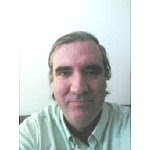
Henry Kendall

Henry Way Kendall was born on December 9, 1926 in Boston, Massachusetts. His father was an industrialist and he had two siblings, a younger brother and sister. He grew up in Sharon, Massachusetts and attended Deerfield Academy in Deerfield, Massachusetts, graduating in 1945. As a child he had an intense curiosity for things mechanical, chemical and electrical. He attended the United States Merchant Marine Academy, and served on a troop transport ship in the north Atlantic during the winter of 1945-46. With the end of the World War II he enrolled in Amherst College, graduating with a bachelors in mathematics in 1950. After graduation he went to the Massachusetts Institute of technology where he earned his Ph.D. in physics. He did post-doctoral work at M.I.T. and Stanford university then returned to M.I.T. as a faculty member.

Kendall's research involved using particle accelerators to probe the make up of the atom. In the 1960s and 70s Kendall worked with Jerome Friedman and Richard Taylor scattering electrons off of protons, neutrons, duterons and other heavier nuclei. These experiments confirmed the existence of quarks, small, sub-nuclear particles that protons and neutrons are made of. Quarks take their name from a line in Finnegan's Wake by James Joyce, and come in two kinds, up quarks and down quarks. Protons are made up of two up quarks and one down quark and neutrons are made up of two down quarks and one up quark. For their work confirming the existence of quarks Kendall, Friedman, and Taylor were awarded the 1990 Nobel Prize in physics.

In a addition to his work in physics, Kendall was also an avid outdoorsman, mountain climber and scuba diver. In the 1960s Kendall served as an adviser to the United States Department of Defense. In 1969 he co-founded the Union of Concerned Scientists and served for many years as its chairman. The Union of Concerned Scientists is a non-profit group that advocates sensible environmental and sustainable agricultural policies. He was elected to the National Academy of Sciences in 1977 and was inducted into the American Alpine Club's Hall of Mountaineering Excellence in 2012.

He died on February 15, 1999 as the result of a scuba diving accident while exploring an underwater cave in Wakulla Springs State Park in Florida.


References:

Bjorken, James D., Friedman, Jerome I., Taylor, Gottfried, Kurt and Taylor, Richard B.; "Henry Way Kendal: 1926-1999"; National Academy Press; 2009

Kendall, Henry W., Nobel Autobiography

Kendall, Henry W. and Aasserud, Finn; "Oral History Transcript - Dr. Henry Kendall"; accessed at aip.org.

 Henry Way Kendall Wikipedia Entry

Sunday, December 2, 2012

George Minot

George Richards Minot was born on December 2, 1885 in Boston Massachusetts. Minot came from a Boston medical family (his great-grandfather, James Jackson, was co-founder of Massachusetts General Hospital) and after private schooling and graduating from Harvard College in 1908 he entered Harvard Medical School, graduating in 1912. In medical school he became interested in hematology and the diseases of the blood, although his first publication was on butterflies in 1902. As an intern he studied the effect of a patient's diet on their blood cells. In 1914 he took a job as an assistant at Johns Hopkins University in Baltimore, Maryland. In 1915 he returned to Boston as an assistant at Massachusetts General Hospital.

In 1922 he became physician-in-chief of Collis P. Huntington Memorial Hospital and in 1928 he became a professor of medicine at Harvard University. Minot published papers on many subjects, including vitamin B deficiency, blood coagulation, arthritis, leukemia, industrial blood poisoning, among others.

In 1914 he became interested in the work of George Whipple. Whipple was studying the effect of diet on anemic dogs and discovered that feeding dogs liver reversed the anemia. Minot, working with William Murphy of Johns Hopkins University, discovered that a diet of liver helped patients with pernicious anemia, a form of anemia characterized by improper red blood cell development. Later, working with William Cohn, he showed which fractions of the liver helped patients with pernicious anemia. Today it is known that pernicious anemia is caused by a deficit of vitamin B-12 or cobalamine. Vitamin B-12 is the only one of the B vitamins that contains an atom of the metallic element cobalt and it is involved in the DNA synthesis of developing red blood cells. For their discovery Whipple, Murphy and Minot were awarded the 1934 Nobel Prize in Medicine.

Minot died on February 15, 1950.

References:

Castle, W.B.; "George Richards Minot: 1885-1950"; National Academy Press; 1974

George Minot Wikipedia Entry

George Minot Nobel Biography

Sunday, November 25, 2012

Lewis Morris Rutherford

Lewis Morris Rutherford was born on November 25, 1816 in Morrisania, New York. He was named for his great-grandfather, Lewis Morris, one of the signers of the American Declaration of Independence. He began attending Williams College as a sophomore, at age 15. While an undergrad he studied natural sciences, including chemistry and finding pieces of a telescope in a storage closet, he manufactured the missing pieces and put it back together. After graduating in 1834 he studied law and passed the bar in 1837. He practiced law until 1849, when he built an observatory on the lawn of his house, which was called the finest private observatory in the country.

Rutherford used his 11 and 1/4 inch telescope to take pictures of the moon, the planets and stars. Then using a diffraction grating of his own manufacture he began taking spectra of planets and stars. In 1863 he published a paper which was the first attempt to classify stars according to their spectra, dividing stars into three categories. Today, most stars are classified using the system developed by Annie Jump Cannon that classifies stars by their color. In order of decreasing surface temperature, O are blue stars, B white/blue stars, A white stars, F yellow/white stars, G yellow stars, K orange stars, and M red stars.

Rutherford served as an trustee of Columbia University from from 1858 to 1884. He was an active participant in the International Meridian Conference which established the prime meridian as the line of longitude that runs through Greenwich, England. In 1867 he served as president of the American Photographical Society. He was an associate of the Royal Astronomical Society and a member of the National Academy of Sciences since its founding in 1863.

In his later years he was in delicate health and he died from the complications of a cold he contracted while traveling to his winter residence in Florida on May 30, 1892.

References:

Anon; "A Sketch of Lewis Morris Rutherford", Popular Science (1893) Vol. 42

Gould, B.A.; "Memoir of Lewis Morris Rutherford: 1816-1892"; National Academy Press; 1895

Lewis Morris Rutherford Wikipedia Entry

Sunday, November 18, 2012

Patrick Blackett, Baron Blackett


Patick Maynard Stuart Blackett was born on November 18, 1897 in Kensington, London. His father Arthur Blackett was a stockbroker and he had two sisters, one older and one younger than him. Starting at the age of nine he attended Allen House preparatory school. During his youth he used a wooden shed in the family garden to make crystal radios and model airplanes. In 1910, just before he turned 13, Blackett began attending Osborne Naval College on the Isle of Wight where he began his training as a naval officer. In 1912 he began studying at Britannia Royal Naval College in Dartmouth. in 1914, with the outbreak of World War I, Blackett served on the HMS Carnarvon which took part in the Battle of the Falkland Islands and he served aboard the HMS Barham which took part in the Battle of Jutland. In 1918, with the conclusion of the war he resigned from the Royal Navy as a lieutenant and went to study mathematics and physics at Magdalene College, Cambridge, where he worked under Ernest Rutherford in the Cavendish Laboratory.

Blackett graduated from Magdalene College with a B.A. in 1921 and continued working for Rutherford for another ten years. In 1923 he became a fellow at Kings College and in 1924 he used a cloud chamber to record the transmutation of nitrogen into oxygen. A cloud chamber is a closed chamber saturated with water or alcohol vapor. When ionizing particles (alpha particles for example) are introduced they create ions. The vapor in the chamber condenses on these ions and the condensed liquid shows the path of the particle through the chamber. While in the Cavendish Laboratory Blackett used a cloud chamber to do experiements involving cosmic rays. From 1924 to 1925 he worked in the laboratories of James Franck in Gottingen, Germany studying atomic spectra. In 1932, working with Italian physicist Giuseppe Occhialini, he developed a cloud chamber with a geiger counter to trigger the camera.

In 1933 he became professor at Birkback College, at the University of London. Also in 1933 he confirmed Carl David Anderson's discovery of the positron. A positron is a positively charged electron, an anti-matter particle. Blackett also worked on annihilation, the collision of matter and anti-matter that produces gamma radiation. In 1937 he became the Longworthy professor at Victoria University in Manchester. While there he worked on a theory of the earth magnetism, hoping to use it to unify the forces of gravity and magnetism. Although he was unsuccessful his work led to the development of paleomagnetism, which was used to prove the existence of continental drift.

In 1935 he was invited to serve on the Tizard Committee, which recommended the installation of radar for air defense. During World War II he served on various defense committees and contributed to the invention of the Mark XIV bomb sight. In 1940 he was awarded the Royal Medal by the Royal Society. In 1948 he was awarded the Nobel Prize for his work on particle physics using cloud chambers. He was appointed chairman of the physics department of Imperial College at London in 1953 and he retired in 1963. Blackett served as an adviser to the post war Labor government and in 1964, at his advice, set up the Ministry of Science and Technology. Blackett was outspoken politically and frequently came under criticism for his socialist and anti-nuclear weapon views.

He died on July 13, 1974.


References:

Brown, Matt; "Patrick Blackett: From Cosmic Rays to International Development"; November 18, 2007; London Blog at blogs.nature.com

Nye, Mary Jo; Blackett: Physics, War and Politics in the 20th Century; Harvard University Press; 2004

Patrick Blackett Nobel Biography

Patrick Blackett Wikipedia Entry

Sunday, November 11, 2012

Vesto Slipher

Vesto Melvin Slipher was born on November 11, 1875 at a farm in Mulberry, Indiana. His younger brother Earl was also an astronomer. He graduated from high school in Frankfort, Indiana and taught briefly at a country school before going to the University of Indiana in Bloomington, Indiana starting in 1897. He earned his bachelors degree in astronomy and mechanics in 1901. He earned his masters in 1903 and his doctorate in 1909 with a dissertation on the spectrum of Mars. One of his professors, Wilbur Cogshall, recommended him to Percival Lowell and Lowell brought Slipher on as an assistant in 1901. Slipher remained at the observatory for fifty three years afterward. He became assistant director in 1915 and became acting director in 1916 with Lowell's death. He became director in 1926 and served there until his retirement in 1954.

Slipher's first project, at the direction of Lowell, writing from his Boston office, was mounting and using the new spectrograph on Lowell's 24-inch refracting telescope. Slipher used it to record the spectra of Mars, Jupiter, and Saturn. Using the spectra that Slipher produced the confirmed the visually known periods of the planets. Using spectra taken of Mars, he attempted to prove there was water in the Martian atmosphere and he attempted to find the rotational period of Venus. He then turned the telescope to the gas giants and determined that the rotational period of Uranus was 10.75 hrs (it was later determined to be 25 hrs.).

Slipher is remembered chiefly for the work that he did determining the velocity of what at the time where called spiral nebula. Today we know these spiral shaped clouds are galaxies, just like our Milky Way. Slipher determined that these spiral nebula were moving much faster (three times) the velocity of any object observed at that time. Edwin Hubble later used this data to show the universe was expanding and the farther an object was away from Earth, the faster it would be moving away. Slipher is also responsible for hiring Clyde Tombaugh and was responsible for overseeing the work involved in the discovery of Pluto.

Awards won by Slipher include the Bruce Medal (1935), the Lalande Prize (1919), a Gold Medal from the Royal Society (1932), the Henry Draper Prize from the National Academy of Sciences (1932) and a gold medal from the Paris Academy of Sciences (1919). Slipher also has a crater on the moon named after him. In addition to his scientific work Slipher was also active in the community of Flagstaff, Arizona, where he was one of the founders of  its first high school.

Slipher died on November 8, 1969, in Flagstaff, Arizona.


References:

Hoyt, Willliam Graves, "Vesto Melvin Slipher: 1875-1969"; National Academy Press, 1980

Trimble, Virginia; Williams, Thomas; Bracher, Katherine; Jarrell, Richard; Marche, Jordan; and Ragep, F. Jamil; "Vesto Slipher" in Biographical Encyclopedia of Astronomers; Springer; 2006

Vesto Sipher Wikipedia Entry

Sunday, October 14, 2012

Sir Edward Sabine

Edward Sabine was born on October 14, 1788 in Dublin, Ireland. He was the fifth son and ninth child of Joseph Sabine and Sarah Sabine nee Hunt. Sabine's mother died one month after his birth. He obtained a military education first at Marlowe and then at Royal Military Academy at Woolrich. He was commissioned as an artillery officer in 1803, becoming a captain ten years later, and he rose to the rank of general in 1870. Sabine was stationed at Gibraltar during the Peninsular War and saw his first action during the War of 1812. On his voyage to Canada the ship he was on was captured by an American privateer. The ship was eventually recaptured by a British frigate and he made his way to Quebec. Sabine served in the Niagara campaign and took part in the siege and assault on Fort Eire, serving with distinction.

He returned to England in 1816 and began doing research in astronomy, terrestrial magnetism, and ornithology. He became a member of the Royal Society in 1818. Also in 1818 Sabine served as astronomer during the Ross expedition looking for the Northwest Passage. During the expedition Sabine took magnetic readings of the Earth and studied birds, identifying a new species (Larus sabini). The following year Sabine took part in another Northwest Passage expedition, this time under William Perry. The expedition was the first to make it north of the arctic circle, returning in 1820. In 1921 Sabine received the Copley Medal for his various researches during this expedition.

For the next couple years Sabine toured the world taking measurements with his pendulum. The period of a pendulum depends on its length and the force of gravity on the bob at the end of the string or arm. Because Earth is not a perfect sphere (it is an oblate sphere which bulges at the equator) the distance to the center of the Earth is not uniform at different latitudes. This causes the gravity at the earth surface to vary at different latitudes with the acceleration of gravity rising as you move toward the poles. The period of Sabine's pendulum, swung at different latitudes, differed due to the differences in gravity caused by the differences in the distance to the center of the Earth. With this experiment Sabine demonstrated that the earth is not perfectly spherical. For this work Sabine was honored with the Lalande Medal of the Institute of France in 1826

When the British Board of Longitude was abolished in 1828, Sabine, with Michael Farady and Thomas Young, was appointed as a scientific adviser to the Admiralty. In this position Sabine advocated for the creation of magnetic measuring stations throughout the British Empire. Because changes in the Earth's magnetic field, which at the time were believed to be the result of weather patterns, affected compass readings these magnetic observatories were built. The observations from these observatories were collated by Sabine in London and he discovered that changes in the Earth's magnetic field were due to sunspot activity and the influence of the moon.

Sabine won a gold medal from the Royal Society in 1849 and served as its president from 1861 to 1871. Sabine was knighted in 1864 and has a crater on the moon named after him. The California grey pine (Pinus sabineana) is also named after him.

He died on June 26, 1883 and was buried in his family vault in Tewin, Hertfordshire.


References:

Anon.; "Sir Edward Sabine"; The Observatory (1883)6:232-233

Vetch, Robert Hamilton; "Sabine, sir Edward"; Dictionary of National Biography, 1885-1900, Volume 50;

Edward Sabine Wikipedia Entry

Sunday, October 7, 2012

Rudolf Leuckart

Karl Georg Friedrich Rudolf Leuckart was born on October 7, 1822 in Helmstedt, Lower Saxony, which would later become part of Germany. His father owned a printing plant and his uncle, Friedrich Sigismund Leuckart, was a professor of zoology. His uncle awakened the interest in zoology in his young nephew, who collected insects. Leuckart was interested in pursuing a career in zoology, but a the time there were no university programs devoted to it, so he was forced to study medicine, which he did at the University of Gottingen starting in 1842. At Gottingen Leuckart met zoologist Rudolf Wagner and became his assistant in 1845. Leuckart's dissertation, the same year, won a university prize. Leuckard became a zoology lecturer and in 1848 he went on his first expedition to the North Sea to study marine microorganisms.

In 1850 Leuckart became professor of zoology at the University of Giessen. The years at Giessen were productive for Leuckart and he did a lot of the work studying parasites. He proved that cattle were the carrier of beef tape worm (Taenia saginata) and that pigs were the carriers of pork tapeworm (Taenia solium). Most vertebrate species have a tapeworm species that has evolved to live in its intestines. His studies of Trichina, the cause of trichinosis was used by Rudolf Virchow's campaign for meat inspection laws in Germany. With Virchow and Friedrich Albert von Zenker, he was the first to document the life cycle of Trichnella spiralis. For his work on parasites Leuckart is known as the father of parasitology. He also studied insects, documenting the anatomy and life cycle of the honey bee and the life cycle of Hippoboscoidea, (called Pupipara at the time) a super-family of obligate blood parasites that includes tsetse flies and bat flies.

In 1861 he was named a privy councilor by the King of Saxony and was awarded an honorary PhD by University of Giessen. In 1869 he moved to the University of Leipzig. At first the facilities were inadequate, but in 1880 a zoological institute was built according to his specifications. It quickly became a center for zoological learning and attracted students from around the world. While at Giessen he created a series of zoological posters showing  species of invertebrates that have been used world wide as teaching aids. Leuckart's magnum opus, a two volume work on human parasites and the diseases they cause remained unfinished at the time of his death but was still widely used by students of parisitology.

 Leuckart died in Leipzig on February 6, 1898.


References:

Kellog, Vernon L.;"Rudolf Leuckart"; Psyche (1898)8:214-215

"Leuckart, Karl Friedrich Rudolph"; in The Complete Dictionary of Scientific Biography; Charles Scribner's Sons; 2008

Rudolph Leuckart Wikipedia Entry