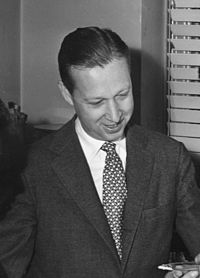
Feodor Felix Konrad Lynen was born on April 6, 1911 in Munich, Germany. His father, Wilhelm Lynen, was a professor of mechanical engineering and his mother, Frieda, was the daughter of an industrialist. Lynen completed his primary and secondary education in Munich and attended Munich University studying chemistry. He completed his Ph.D. in 1937 with a dissertation identifying the toxic substance in amanita mushrooms. After graduation Lynen remained at Munich University becoming a chemistry lecturer in 1942, an assistant professor in 1947, and biochemistry professor in 1953. When World War II broke out Lynen was exempt because of injuries he sustained in a skiing accident. In 1956 he became director of the Max Plank institute for Cellular Chemistry.
Lynen's research dealt with determining the biochemical pathways by which cells produce fatty acids and sterols. Working with Konrad Bloch, he discovered the pathway by which cholesterol is synthesized. Later he determined the structure of acytel-coenzyme A. Acetyl-CoA is an important biochemical intermediate. It feeds two carbon acetic acid fragments from glycolysis (the initial steps by which cells break down glucose) into the citric acid cycle to generate cellular energy. It also is the basis of fatty acid and cholesterol synthesis using the two carbon acetate to build longer carbon chains to store energy or produce bigger carbon molecules. For their work Lynen and Bloch were awarded the Nobel Prize in Physiology and Medicine in 1964.
Other awards won by Lynen include the Grand Cross of Merit with Star and Sash of the Federal Republic of Germany in 1965, Norman Medal of the German Society for Fat Research in 1967, the Pour le mérite für Wissenschaften und Künste in 1971, and the Austrian Decoration for Science and Art in 1972.
Lynen died on August 6, 1979.
References:
Kresge, Nichole, Simoni, Robert D., and Hill, Robert L.; "Biotin Dependent Enzymes: the Work of Feodor Lynen"; Journal of Biological Chemistry (2009)284:e6-e7
Feodor Lynen Nobel Biography
Feodor Lynen Wikipedia Entry
Showing posts with label Biochemistry. Show all posts
Sunday, April 6, 2014
Sunday, December 1, 2013
Martin Rodbell
Martin Rodbell was born on December 1, 1925 in Baltimore, Maryland. He was the son of a grocer and attended public schools including an accelerated program and Baltimore City College. In 1943 he went to John Hopkins University where he studied biology and French existential literature. His studies at John Hopkins where interrupted by World War II, when he served in the U.S. Navy as a radio operator in the South Pacific. He graduated with his bachelors in 1949, spending his last year taking all the advanced chemistry courses offed by Hopkins. In 1950 he went to the University of Washington where he earned his doctorate under Donald Hanahan, completing a thesis on the metabolism of lecithin in the liver. Lecithin is a mixture of phospholipids that acts as a surfactant and lubricant.
Rodbell did his postdoctoral work at the University of Illinois at Urbana-Champaign where he worked for two years as a research assistant. In 1956 he took a position as a research biochemist in the laboratory of in the laboratory of Christian Anfinsen at the National Heart Institute where he studied the composition of lipid proteins and the role of glucose in adipose tissue. In 1961 Rodbell transferred to the National Institute of Arthritis and Metabolic Disease (now part of the National Institute of Diabetes and Digestive and Kidney Diseases). The move also coincided with a change in the focus of his research moved away from studying phospholipids and began researching cellular second messenger systems.
Second messengers are chemicals that are let into or produced inside a cell in response to an outside signal. The production or ingress of second messengers is stimulated by the reception of a chemical signal at a receptor protein embedded in the cellular membrane. Rodbell was researching the effects of glucagon on rat liver cells and discovered g-proteins, a series of inter-cellular proteins that are linked to cellular membrane embedded receptors which can activate transcription and protein production. These proteins are used throughout the endocrine system as a means of coupling the extra-cellular signal with internal cell activity. For his discoveries the g-proteins Rodbell shared the 1994 Nobel Prize in Physiology or Medicine with Alfred G. G. Gilman.
Rodbell retired in 1994 and died on December 7, 1998 of multiple organ failure.
References:
Rodbell, Martin; Nobel Autobiography at nobelprize.org
Biographical Matter at The Martin Rodbell papers at nlm.nih.gov
Martin Rodbell Wikipedia Entry
Sunday, September 1, 2013
Karl August Folkers
Karl August Folkers was born in Decatur, Illinois on September 1, 1906. His father August William Folkers was born in Germany and had emigrated to the United States with his parents and married Laura Susan Black in 1904. As Folkers grew up he became interested in chemistry and obtained chemistry sets to experiment with. He attended the local public schools and he attended the University of Illinois at Urbana-Champagne where he earned a BA in chemistry studying under Carl Marvel in 1928. Folkers earned a PhD under Homer Atkins at the University of Wisconsin with a dissertation on using catalysts to reduce esters into alcohols. Folkers did post-doctorate work under Treat Johnson at Yale University studying biochemistry. In 1934 Folkers joined the pharmaceutical company Merck. In 1939 Folkers became the assistant director of research at Merck.
Folkers is best remembered for his determination of the structure of vitamin B-12, which is also called cobalamin. Vitamin B-12 is unique among the water soluble B vitamins in that it contains an atom of cobalt. Vitamin B-12 is used in DNA synthesis and regulation and also fatty acid synthesis. It is synthesized by bacteria and archea and must be ingested by higher organisms. In humans lack of vitamin B-12 causes pernicious anemia where red blood cells do not develop properly and lyse easily. With Fern Rathe and Edward Kaczka, Folkers isolated the antibiotic cathomycin in 1955.
Honors won by Folkers include the Perkin Medal in 1960 and the Priestly Medal in 1985. Folkers was elected to the National Academy of Science in 1948.
Folkers died on December 7, 1997.
References:
Olson, Robert E.; "Karl August Folkers (1906-1997)"; Journal of Nutrition (2001)131:2227-2230
Shive, William; "Karl Augus Folkers September 1, 1906-December 7, 1997"; Biographical Memiors: National Academy Press
Karl August Folkers Wikipedia Entry
Sunday, August 25, 2013
Sir Hans Adolph Krebs
Hans Adolph Krebs was born on August 25, 1900 in Hildesheim, Germany. He was the second child of Georg Krebs, an ear/nose/throat doctor and a biochemist, and his wife Alma. Krebs attended the local grammar school and was briefly conscripted into the German imperial army at the end of World War I. Krebs then studied medicine at the University of Gottingen and the University of Freiburg, and earned his PhD from the University of Hamburg in 1925. He studied chemistry in Berlin for a year and then took a job as an assistant to Otto Warburg at the Kaiser Wilhelm Institute for Biology. He remained there until 1930 when, after briefly doing clinical work in Altona, Germany, he returned to the University of Freiburg, where working with Kurt Henseleit he described the urea cycle, which take place in the mammalian liver. The urea cycle is how mammals remove ammonia (which is toxic in large amounts), from amino acid metabolism, converting it into urea which is excreted by the kidneys.
With the election of Adolph Hitler and the rise of the National Socialist (Nazi) Party in 1933 Krebs was dismissed from his position because of his Jewish heritage. After his dismissal Krebs emigrated to England where he took a position at Cambridge University sponsored by a Rockefeller Foundation Studentship grant. In 1935 he was appointed as a lecturer in pharmacology at Sheffield University and in 1938 he was made lecturer-in-charge of Sheffield University's newly founded department of biochemistry. In 1945 the appointment was raised to a professorship and he took charge of the Medical Research Council's research unit established at the university. In 1954 he was appointed as the Whitley Professor of Biochemistry at Oxford University.
Krebs' major research accomplishment was elucidating the citric acid cycle (also called the Krebs cycle or the tri-carboxcylic acid cycle.) The citric acid cycle, which takes place in the mitochondrial matrix (inside the mitochondrial inner membrane) in eukaryotes and in the cytosol of prokaryotes, is a cyclic reaction cycle that produces reduced equivalents that are used to produce cellular energy. It is the final set of reactions of cellular metabolism by which organisms break down carbohydrates producing energy and releasing carbon dioxide (for a video showing the series of reactions by which carbohydrates are broken down, highlighting the citric acid cycle, to make cellular energy see here). For his discovery of the citric acid cycle Krebs shared the 1953 Nobel Prize in physiology and medicine with Fritz Lipmann.
Other honors won by Krebs include a knighthood in 1958 and election as a honorary fellow of Girton College, Cambridge University in 1979.
Krebs died on November 22, 1981.
References:
Stubbs, Marion and Gibbons, Geoff; "Hans Adolph Krebs (1900-1981)...His Life and Times"; IUBMB Life (2000)50:163-166
Hans Krebs Nobel Biography
Hans Adolph Krebs Wikipedia Entry
Monday, July 1, 2013
Lawrence J. Henderson
Lawrence Joseph Henderson was born on June 3, 1878 in Lynn, Massechusets. His father Joseph was a businessman. Henderson went from being an undersized infant to an athlete who was known for his running speed. Henderson attended school in Salem, Massachusetts and entered Harvard College at the age of 16. He was fond of mathematics and physics and did well in those subjects. He earned his A.B. degree in 1898 and entered Harvard Medical School later that year. He earned his MD in 1902 and afterwards spent two years working in Franz Hofmeister's laboratory at the University of Strasbourg. When he returned to the United States he took a lecturer position at Harvard Medical School. He would remain at Harvard for the rest of his career, as an instructor from 1905-1910, as an assistant professor of biological chemistry from 1910-1919, as a professor from 1919-1934 and as the Abbot and James Lawrence professor of biological chemistry from 1934 until his death.
Henderson's initial research interest upon returning to America was in understanding buffer systems and how the human body maintains its pH balance. In the blood carbon dioxide from cellular respiration combines with water to form carbonic acid. Carbonic acid (H2CO3) exists in the blood primarily in the form of bicarbonate (HCO3-). Bicarbonate and the proteins of the blood act as buffers that maintain the body's pH. When excess acid or base is produced bicarbonate acts to maintain the body's pH at a slightly basic pH (about 7.35). From his research on buffers Henderson developed an equation that can be used to calculate the pH of a buffer system. The Henderson/Hasselbalch equation equates the pH to the pKa of the acid in the buffer plus the log of the concentration of the acid's anion divided by the concentration of the associated acid (pH = pKa + log([A-]/[HA]).
Henderson's later research career dealt with more philosophical issues in science. He published two books, The Fitness of the Environment and The Order of Nature, devoted to the discussion of global problems of the fitness of organisms in their environments. In The Order of Nature he concluded that "the whole evolutionary process, both cosmic and organic, is one, and the biologist may rightly regard the universe, in its essence as biocentric."
Henderson died on February 10, 1942 in Cambridge, Massachusetts.
References:
Cannon, Walter M.; "Biographical Memoir of Lawerence Joseph Henderson 1878-1943"; National Academy Press; 1943
Mayer, Jean; "Lawrence J. Henderson - A Biographical Sketch"; The Journal of Nutrition (1968)94:3-5
Smith, Charles H.; "Henderson, Lawrence Joseph (United States 1878-1942)"; retrieved from: http: wku/people.wku.edu/charles.smith
Lawerence Joseph Henderson Wikipedia Entry
Monday, April 8, 2013
Edwin G. Krebs
Krebs' research involved enzymes, the protein molecules that catalyze biochemical reactions. While at the University of Washington, Krebs worked with Edmond Fisher and the pair discovered the reversible phosphorylation of glycogen phosphorylase which serves to activate the enzyme. Glycogen phosphorylase is the enzyme that removes monosacharides from glycogen (the polysacharide used to store glucose for future use) so that they can be broken down into energy. Glycogen phosphorylase exists in two forms A and B. The Cori's had found that form B is inactive unless it is in the presence of adenosine monophosphate (AMP) and that form A is active without AMP. They also knew from the experiments of the Cori's that the active A form degrades into the inactive B form. Krebs and Fischer discovered that the B form is reversibly phosphorylated (phosphate is added to the protein molecule) converting it into the A form, which causes it to be activated so that it can break down glycogen. This was the first discovery of reversible phosphorylation which is a ubiquitous mechanism that serves as a means of activating many enzymes and transducing biochemical signals. For their discovery of the regulation of glycogen phosphorylase by phosphorylzation Krebs and Fischer were awarded the 1992 Nobel Prize in medicine and physiology.
Krebs died on December 9, 2009.
References:
Fischer, Edmond H.; "Edwin G. Krebs (1918-2009)"; in Biographical Memoirs; 2010; National Academy Press
Krebs, Edwin G.; "Nobel Autobiography"
Edwin G. Krebs Wikipedia Entryhttp://en.wikipedia.org/wiki/Edwin_G._Krebs
Monday, March 25, 2013
Sidney W. Fox
Sidney Walter Fox was born on March 24, 1912 in Los Angeles, California. His father, Jacob Fox, was a wigmaker and his mother, Louise Berman, was a Ukrainian immigrant. He attended the University of California Los Angeles, earning a bachelors in chemistry and the California Institute of Technology, earning a PhD in 1940. He taught briefly at the University of California Berkeley and the University of Michigan before moving to Iowa State University in 1943 and where he was a professor of biochemistry from 1947 to 1954. He was professor of chemistry at Florida State University from 1954 to 1964 when he became director of the Institute of Molecular and Cellular Evolution at the University of Miami. He retired in 1989.
Fox's biochemical research dealt with the study of the origin of life. Fox's research showed that amino acids, when subjected to heat, will spontaneously form polypeptide compounds, Fox dubbed proteinoids (the earlier Miller-Urey experiment had shown that amino acids could have been generated by conditions of the Earth's primordial atmosphere). Fox hypothesized that these poly-amino acid molecules could be the origin the protein molecules that make up living things. When put into water or salt solution these proteinoids form microspheres, that are one or two microns in diameter. These microspheres behave like cellular membranes, budding off and forming new microspheres. Fox believed that these proteinoid microspheres were the origin of bacterial cell walls. Fox's proteinoid theory for the origin of life has its detractors, who believe that concentrations of the particular amino acids that Fox used in his experiments could not have been present in the primordial environment. Fox was one of the first scientists to examine moon rocks brought back to Earth by NASA.
Fox died on August 10, 1998 in Mobile, Alabama.
References:
Daintith, John; "Fox, Sydney Walter" in Biographical Encyclopedia of Scientists, Third Edition; CRC Press; 2010
"Sydney W Fox, Analyzed First Moon Rocks"; Los Angeles Times; August 18, 1998
Sydney W. Fox Wikipedia Entry
Monday, September 17, 2012
Albrecht Kossel
Ludwig Karl Martin Leonhard Albrecht Kossel was born on September 16, 1853 in Rostock, Mecklenburg. His father was a merchant, bank director and Prussian Council. Kossel attended gymnasium in Rostock and then in 1872 he went to the newly founded University of Strasbourg. As a youth he had shown an interest in chemistry and botany and he continued those studies at the university. He finished his studies at the University of Rostock, passing the state medical examination in 1877 and earning his medical doctor degree in 1878. After graduation he worked in the laboratory of Felix Hoppe-Seyler, who had been one of his biochemistry professors at Strasbourg.
Hoppe-Seyler in addition to being a biochemist was an inorganic chemist and was interested in what chemical elements made up living tissues. In his lab Kossel studied "nucleins" the newly isolated contents of cell's nuclei. Nucleins had been discovered by Friedrich Miescher in 1869. He had determined that they were chemically different from protein, being more acidic. In 1883 Kossel became the director of the Chemistry Division of the Physiological Institute at the University of Berlin. In the period from 1885 and 1901 Kossel isolated from nuclein the five nucleic acid bases that make up DNA and RNA: adenine, guanine, cytosine, thymine and Uracil. These five bases are the letters of the genetic code that code for proteins. In DNA, the instructions for construction proteins are written in four nucleotides: adenine, guanine, cytosine and thymine. In messenger RNAs, the translations of the DNA code that are sent to ribosomes, where proteins are made, thymine is replaced with uracil.
In 1895 Kossel became a professor of physiology and director of the Physiological Institute at the University of Marburg. In Marburg Kossel began to investigate the structure of proteins. In 1896 Kossel isolated histidine, an amino acid with a imidazol functional group. Kossel also was the first to isolate theophyllin a therapeutic drug found in cocoa and tea. In 1901 Kossel became the director of the Physiological Institute at Heidelberg University. In 1910 Kossel was awarded the Nobel Prize "in recognition of the contributions to our knowledge of cell chemistry made through his work on proteins, including the nucleic substances". In 1924 Kossel became professor emeritus at Heidelberg, but continued teaching. His research also continued as he continued working on determining the structure of proteins.
Kossel died on July 5, 1927.
References:
Jones, Mary Ellen; "A Biographical Sketch of Albrecht Kossel"; Yale Journal of Biology and Medicine(1953)26:80-97
Albrecht Kossel Nobel Biography
Albracht Kossel Wikipedia Entry
Monday, April 9, 2012
Melvin Calvin
After finishing his Ph.D. he did a postdoc at the University of Manchester in the lab of Michael Polanyi where he studied phthalocyanines, cyclic organic compounds that form complexes with other atoms and are used as dyes. After two years in Manchester he was offered a lecturer position at the University of California at Berkeley, in 1937, where he was the first non-Berkeley graduate to join the chemistry department in more than a quarter century. Working with Gilbert Lewis he studied the chemistry of the porphyrin the organic nitrogen ring compound found in the heme portion of the hemoglobin molecule. Poryphyrin rings complex with metallic atoms, iron in the case of hemoglobin. Calvin remained at U.C. Berkeley for the rest of his career, where he served as the founding director of the Laboratory of Chemical Biodynamics and as an associate director of the Berkeley Radiation Laboratory.
He was promoted to professor of chemistry in 1947. Calvin is most famous for using radioactive carbon to study the chemical reaction of the carbon fixation, the dark reaction of photosynthesis. In plants the enzyme ribulose-1,5-biphosphate oxygense (RuBisCO) adds carbon dioxide to the five carbon sugar ribulose-1,5-biphosphate, which breaks down into two three carbon phosphogycerate molecules. Carbon fixation is what distinguishes autotrophic plants the other heterotrophic kingdoms of organisms. The cyclic pathway by which carbon dioxide is incorporated by plants is called the Calvin cycle.
For his research on carbon assimilation by plants he was awarded the Nobel Prize in chemistry in 1961. His other honors include election to the National Academy of Science and a postage stamp honoring him in 2008. He served as president of both the American Chemical Society and the American Society of Plant Physiology. He also served as the president of the Pacific Division of the American Society for the Advancement of Science. He served as an adviser to the National Aeronautics and Space Administration regarding the transmission and encounter of pathogens and organic compounds on the Moon and the planets of our solar system. He also served as a presidential scientific adviser. He retired from Berkeley in 1980 but remained doing research until 1996.
He died of a heart attack on January 8, 1997.
References:
Seaborg, Glenn T. and Benson, Andrew A.; "Melvin Calvin: April 8, 1911-January 8, 1997"; Biographical Memoirs Vol 75; National Academy Press; 1998
Melvin Calvin Nobel Biography
Melvin Calvin Wikipedia Entry
Sunday, January 15, 2012
William Prout
William Prout was born on January 15, 1785 in Horton, in Gloucestershire, England, where his family had lived for generations. His father was a farmer and like most rural youths his early education was almost negligible, being over by the time he reached 13. At age 17, aware of his lack of education he pursued a path of systematic learning, first at a private academy in Sherston, where he learned the rudiments of Latin and Greek, then at Redland Academy, a seminary in Bristol, where he paid his tuition by teaching the younger students. He spent two years at Redland during which his interest in chemistry was excited and which remained with him throughout his life. With the intention of a career in medicine, in 1808, at the age of 23, he began at the University of Edinburgh (Oxford or Cambridge were out of the question due to Prout's low social status). He graduated with his M.D. in 1811.
After graduation Prout went to London and took rooms off of Leicester Square. In order to gain experience in medical practice he walked the wards of the United Hospitals of St. Thomas' and Guy's. He was licensed by the Royal College of Physicians in 1812 and set up a practice. Each day he would rise early so that he could conduct chemical research before he breakfasted at 7, and then saw patients during the day. Prout was not primarily a clinician and was lax in charging his patients, but he spared no expense in devising apparatus for his chemical experiments, which was why he was not as financially successful as many of his medical colleagues. Prout was part of the medical revolution of the early 19th century, understanding the causes of disease, rather than just the symptoms.
Prout's chemical research made many breakthroughs in the understanding of the importance of chemistry in human physiology. In 1817 Prout isolated purified urea (the nitrogenous waste product in urine) and described its reactions. In 1823 he showed that hydrochloric acid is the acidic component of gastric juice. In 1827 he proposed a classification of food substances, including sugars and starches, oily bodies, and albumins, which today we classify as carbohydrates, fats and proteins. Prout's belief in the importance of chemistry in physiology put him at odds with the vitalists, who believed that chemistry did not play an important role in physiology, and this disagreement played out in the medical journals of the day.
Despite his his many advances in the science of physiology Prout's most famous discovery was in physical chemistry and not physiological chemistry. In 1815, observing the tables of elemental atomic weights that were available, he anonymously hypothesized that atomic weights of the elements were multiples of the atomic weight of hydrogen and that the hydrogen atom was a fundamental particle (which he called the protyle) of which the other elements were built. While we know now that atomic weights used today are not exact multiples of the weight of hydrogen (due to the mass converted into binding energy holding nuclei together and the averaging of isotopic weights), Prout's insight was so important that in 1920 Ernest Rutherford chose to name the newly discovered proton, giving credit to Prout.
Honors won by Prout include election into the Royal Society in 1819 and the Copely Medal, the oldest and most prestigious award given by the Royal Society, in 1827. As Prout aged he became increasingly hard of hearing, eventually going totally deaf. It was this deafness that caused Prout to drop out of scientific circles and discontinue his researches.
Prout died on April 9, 1850.
References:
Brock, W.H.; "The Life and Work of William Prout"; Medical History(1965)9:101-126
Rosenfeld, Louis; "William Prout: Early 19th Century Physician-Chemist"; Clinical Chemistry(2003)49:699-705
William Prout Wikipedia Entry
Sunday, November 13, 2011
Edward Adelbert Doisy
Edward Adelbert Doisy was born on November 13, 1893 in Hume, Illinois. His father, Edward, was a traveling salesman and his mother Ada was a homemaker. He went to the University of Illinois, where he earned his bachelors in 1914 and his masters in 1916, both in chemistry. From 1915 until 1917 he was a biochemistry assistant at Harvard University and from 1917 to 1919 he served in the U.S. Army Sanitary Corps. Starting in 1919 he taught biochemistry at Washington University in St. Louis, Missouri and he finished his Ph.D., from Harvard University, in 1920, with his thesis research on methods of detecting nitrogen containing biochemicals in blood, including creatine, creatinine and uric acid. In 1923 he was named the head of the biochemistry department at St. Louis University, in St. Louis, Missouri, where he remained for the rest of his career.
With Edgar Allen, his research assistant, Doisy investigated the mouse estrous cycle and by 1936 they succeed in isolating all three estrogens (esterone, esterdiol and estratiol) from human urine (while collecting samples, one driver committed a traffic violation and was pulled over by a policeman, who when seeing the bottles of amber liquid in the car, believed that the driver was a bootlegger). Doisy followed the work of Danish researcher Henrick Dam, who had grown baby chickens on an artificial diet that contained no fats, and found that they were prone to hemmoraging. Dam also found this could be cured by a diet of hempseed, and was able to isolate the active principal. Doisy, with the assistance of graduate assistant Ralph McKee, was able to isolate two forms of this chemical (named K1 and K2).
Vitamin K, first reported by Dam, is short for Koagulationsvitamin, the German name given to it. Vitamin K functions to modify proteins by adding a carboxy group certain glutamine residues forming gamma-carboxyglutamate, which allows the protein to bind calcium. These modified proteins take part in the blood coagulation cascade and bone metabolism. Like other fat soluble vitamins (A and D) it is stored in fat tissue in the human body. Newborns are injected with a dose of vitamin K to prevent hemmoraging. It is found in green leafy vegetables such as spinach and Swiss chard and fruits including avacado, grapes, and kiwi fruit. For their work in discovering vitamin K, Doisy and Dam were awarded the 1943 Nobel prize in physiology or medicine.
Other awards won by Doisy include honorary degrees from Yale, Washington, Chicago, Illinois, St Louis, Gustavus Aldolphus College, and Paris Universities. He served on the League of Nations Committee for the Standardization of Sex Hormones in 1932 and 1935. He was president of the American Society of Biological chemists from 1943 to 1945, the Endocrine Society from 1948 to 1950 and the Society of Experimental Biology and Medicine from 1950 to 1951. In 1955 the biochemistry department of St. Louis University was named after him. He retired in 1965.
He died on October 23, 1986.
References:
Carey, Charles W.; American Scientists; Infobase Publishing; 2006
Simoni, Robert D., Hill, Robert L., and Vaughn, Linda; "The Discovery of Esterone, Esterol, and Esterdiol and the Biochemical Study of Reproduction. The Work of Edward Aldebet Doisy"; The Journal of Biological Chemistry(2002)277:e7
Edward A. Doisy Nobel Autobiography
Edward Aldebert Doisy Wikipedia Entry
Monday, September 5, 2011
Stanford Moore
Stanford Moore was born on September 4, 1913 in Chicago, Illinois. His father, Howard Moore, at the time was a law student at the University of Chicago. His mother was a graduate of Stanford University, where his parents met. It is alleged that this was the origin of Moore's first name. Moore began school at age 4 at a progressive school in Winnetka, Illinois. When he was six his father took a teaching position at the University of Florida Law School. Later he took a position at Mercer University in Macon, Georgia. During these years Moore attended public schools. When his father took a position at the Vanderbilt University Law School, where he remained until his retirement in 1949, Moore attended the Peabody Demonstration School, which was attached to the George Peabody College for Teachers. Moore attended the school for seven years and was an outstanding student.
Moore attended Vanderbilt University and was initially torn between careers in chemistry and aeronautical engineering. In his third year he was influenced by Arthur William Ingersoll, and took an interest in organic chemistry and molecular structure. He graduated from Vanderbilt in 1935 with a BA in chemistry. He also won the Founder's Medal as the outstanding student in his class. Moore went to graduate school at the University of Wisconsin where he worked for Karl Link and learned micro analytical techniques. He graduated in 1938 with a Ph.D. in organic chemistry. His thesis project was a method for determining which monosacharides were in the polysacharides he was analyzing. After graduation he took a job as a research assistant working for Max Bergman at the Rockefeller Institute for Medical Research. During World War II Moore worked for the Office of Scientific Research and Development researching therapeutic agents for mustard gas and other chemical warfare agents.
After the war he returned to the Rockefeller Institute and worked with William H. Stein on chromatographic methods of determining the amino acid sequence of proteins. Proteins are macromolecules composed of a sequence of amino acids bound together by peptide (amide) bonds. Moore and Stein, worked with Christian Anfinsin of the National Institutes of Health, determining the sequence of ribonuclease, an small enzyme of only 124 amino acid residues. From the determination of the sequence of the amino acids they were able to learn about the active site of the enzyme, where the chemical reaction takes place. Enzymes are proteins that catalyze chemical reactions, speeding up the biochemical reactions in living organisms. For their work on the structure of ribonuclease Moore, Stein, and Anfinsen won the Nobel Prize in Chemistry in 1972.
Other honors won by Moore include honorary doctorates from the University of Brussels and the University of Paris, the American Chemical Society award for Chromatography and Electrophoresis, shared with Stein, and the Richards Medal from the American Chemical Society. Moore remained working at the Rockefeller Institute until his death.
Moore died on August 23, 1982.
References:
Smith, Emil L. and Hirs, C.H.W.; "Stanford Moore: September 4, 1913 - August, 23, 1982"; Biographical Memoirs Vol. 56; National Academy Press; 1987
Stanford Moore Nobel Biography
Stanford Moore Wikipedia Entry
Sunday, February 27, 2011
Charles Best

Charles Herbert Best was born on February 27, 1899 in West Pembroke, Maine. He was the only son of Luella Fisher and Dr. Herbert Best, who were Canadians from Nova Scotia. His father was a country doctor and restless with his country practice moved twice during Best's youth. Best went through public and high school in Pembroke, Maine. After a year at Harbord Collegiate, making up studies in French and Canadian history, he entered the University of Toronto in 1916. He joined the Canadian Army in 1918, after first being rejected because of a heart murmur. He was discharged in 1919, having not seen combat, and returned to the University of Toronto.
In 1921 Best, having just completed a bachelors with honors in physiology and biochemistry was assigned, along with his friend Clark Noble, to work as an assistant to Frederick Banting who wanted to conduct an experiment that involved blocking the pancreatic ducts of dogs. Blocking the pancreatic duct, through which pancreatic, digestive juices drain into the small intestine, has the effect of destroying most of the pancreas, leaving only the cells of the islets of Langerhans, specialized cells within the pancreas. Banting wanted to isolate these cells in order to look for a hormone that would relieve diabetes. Diabetes is a disease caused by the lack of the hormone insulin. Insulin causes cells to uptake sugar out of the blood stream, and without it blood glucose levels can rise to dangerous levels which cause damage.
Banting was only given limited laboratory space and could only accommodate one of his assistants, and there is an apocryphal story about Best and Noble flipping a coin to determine who would be Banting's assistant. Best assisted Banting in operating on dogs to remove their pancreata and then treating them with extracts they had obtained from isolated islet of Langerhans cells, which they called "Isletin". They had a great deal of trouble because their laboratory space, during the hot summer, was not very clean and many of the dogs died of infection. It was not until August that they were able to lower the blood sugar of a experimental dog with injections of isletin, whereas injections of liver and spleen extracts had no affect. By December, 1921 Banting and Best were able to obtain purified insulin by extracting beef pancreas with acidic alcohol. In 1923 Banting and John Macleod, who had arranged for the laboratory space, were awarded the Nobel Prize for Physiology or Medicine "for the discovery of insulin". Best was not included because he had not yet finished his doctorate. Banting was upset by Best's exclusion from the prize and shared his prize money with him.
Best succeeded Macleod as professor of physiology at the University of Toronto in 1929 and during World War II he was involved with a program that obtained and used dried human serum. During his later years he served as an advisor for the medical research program of the World Health Organization. Honors awarded to Best include election to the Royal Society in Britian and the Royal Society of Canada, as well as 18 honorary degrees from universities around the world.
Best died on March 31, 1978.
References:
Best, Henry B. M.; Margaret and Charley: The Personal Story of Dr. Charles Best, the Co-Discoverer of Insulin
Charles Herbert Best Wikipedia Entry
Tuesday, September 28, 2010
Archibald Vivian Hill

Archibald Vivian Hill was born on September 26, 1886 in Bristol, England. His family had little money and Hill won his education by competing for scholarships. His secondary education was at Blundell's School from which he obtained a scholarship to Trinity College, Cambridge. At Cambridge he studied mathematics and natural sciences, graduating third wrangler (highest honors) in mathematics in 1907. After graduation with the urging of his teacher, Sir Walter Morely Fletcher, he accepted a fellowship to do physiological research that allowed him to stay at Cambridge for four more years.
With the encouragement of John Langley, the owner and editor of the Journal of Physiology, Hill began investigating "the efficiency of cut out frog muscle as a thermodynamic machine". At the time it was known that muscles produce heat in response to a twich or tetanus, in tetanus the rate of heat production declines as the stimulation continues and that the ratio of of work to total energy is dependant on the load and has a maximum of .30. Hill using a more advanced temperature sensing device was able to determine that heat was produced both during and after muscle contraction, in the recovery phase.
From 1914 to 1919 Hill devoted his time to the war effort, commanding an experimental anti-aircraft section. After the war, Hill returned to Cambridge and soon after accepted a faculty chair at Manchester University. He continued his research into the heat production of muscles, discovering that the heat produced at the initiation of a muscle contraction did not require the presence of oxygen gas. The heat produced by muscles upon recovery however was greater in the presence of oxygen than it was in nitrogen.
Working in at the same time the German biochemist Otto Meyerhof had shown that in the recovery phase lactic acid, which was believed to be the chemical product of muscle contraction, can be reconverted back into glycogen or combusted by oxidation. Hill shared the 1922 Nobel Prize for Physiology or Medicine with Meyerhof "for his discovery relating to the heat in the muscle". This synthesis of thermodynamics and biochemistry, though some was later proved incorrect, was the first coordinated explanation of muscle function. Together Hill and Meyerhof coauthored only one paper together, but Hill kept a stack of the reprints of Meyerhof's papers, which he was constantly referring to. Hill and Meyerhof received their Nobel Prizes in 1923. In 1923, shortly before the Nobel was announced, Hill accepted a professorship at London University, where he remained until 1951.
As years passed a clearer picture of the chemical processes involved in the production of high energy compounds used in muscle contraction emerged. Eventually it became clear that there were two chemical pathways by which the energy used in muscle contraction was produced, one dependant on oxygen and another independent of oxygen, the so called aerobic and anaerobic pathways. In the aerobic, with oxygen, pathway glucose, the major source of biochemical energy, is converted entirely into water and carbon dioxide. In the anaerobic pathway glucose is broken down with lactic acid as an end product. Hill's observation of a smaller heat produced in the recovery phase without oxygen is the muscle tissue rebuilding its store of high energy compounds with the production of lactic acid.
After receiving the Nobel Prize Hill continued his work on muscle biophysics and extended his research to the measurement of heat released by nerve impulses. His work is largely responsible for the emergence of the study of biophysics. Other honors he received include election to the Royal Society in 1918, the Royal Society's Copley Medal in 1948 and numerous honorary doctorates from universities British and foreign. He served as a member of Parliament, representing Cambridge from 1940 to 1945.
Hill died on June 3, 1977.
References:
Bassett Jr., David R.; Scientific Contributions of A. V. Hill: Exercise Physiology Pioneer; Journal of Applied Physiology(2002)93:1567-1582
Archibald V. Hill Nobel Biography
Archibald Hill Wikipedia Entry
Sunday, July 4, 2010
John Howard Northrop

John Howard Northrop was born on July 5, 1891, in Yonkers, New York. His father John Isaiah Northrop, a tutor in the zoology department at Columbia University was fatally injured in an explosion and fire at the zoology museum shortly before his birth. His mother, Alice Rich Northrop, was a botanist and naturalist and helped introduce nature studies into the curriculum of the New York City Schools.
Northrop excelled in chemistry and mathematics in the public schools of Yonkers, New York. Northrop attended Columbia University, studying chemistry and zoology, and was an outstanding member of the rifle and fencing teams, graduating with a B.S. in 1912. He continued at Columbia, earning a M.A. in 1913 and his pH.D. in 1915, completing a thesis on "The Organic Phosphoric Acid of Starch".
After finishing his doctorate, Northrop accepted an offer to work under Jaques Loeb at the Rockefeller Institute. He became an associate a the institute a year later and with the exception of a year spent as a Captain in the Chemical War Service (1917-1918) he remained at the institute becoming an associate member in 1920, a member in 1924. In 1949 he was appointed professor of bacteriology at the University of California and was later appointed professor of biophysics.
Northrop's work at Columbia concerned carbohydrates. Later, working under Loeb, he did research on Drosophilia, examining the relationship between environmental factors and heredity. During World War I, Northrop worked on ways of producing chemicals that were in short supply including acetone. In 1920 Northrop isolated pepsin using a method previously described by Cornelius Pekelharing, but was unable to crystallize it. When in 1926 James B. Sumner crystallized urease, Northrop took another look at the problem. In 1929 Northrop was able to crystallize pepsin and after numerous attempts to separate the enzyme activity from the protein, he was able to conclude that enzymes are proteins. At the time there was doubt about the nature of enzymes, and it was Northrop's work that was able to conclusivley demonstrate the protein nature of enzymes.
Enzymes are the catalysts that allow chemical reactions to take place in biological systems. Pepsin is a digestive enzyme that breaks down proteins into amino acids. Pepsin is secreted by the chief cells of the stomach in an inactive form called a zymogen. Hydrochloric acid, secreted by the parietal cells of the stomach cause the inactive pepsin (called pepsinogen) to cleave itself, leaving the active form of the enzyme.
Northrop is the author of Crystaline Enzymes published in 1939 and was the editor of the Journal of General Physiology for a number of years. In 1949 Northrop, along with Sumner, were awarded the Nobel Prize for Chemistry for their work demonstrating the protein nature of enzymes. Other awards Northrop has won include the Stevens Prize (from Columbia) in 1931, the Chandler Medal in 1936, the Elliot Medal in 1939 and the Alex Hamilton Medal in 1961. He also has honorary doctorates from the Universities of Harvard, Columbia, Rutgers and Yale.
Northrop died on May 27, 1987..
References:
Herriott, Roger M.; "John Howard Northrop"; Journal of General Physiology (1981) 77:597-599
Herriott, Roger M.; "John Howard Northrop" in Biographical Memiors, Vol. 63; National Academy Press; 1994
John H. Northrop, Nobel Biography
Sunday, April 4, 2010
William Cumming Rose
William Cumming Rose was born on April 4, 1885 in Greenville, South Carolina. His father, John M. Rose was a Presbyterian minister and the family moved often. Rose attended a variety of local schools until he was 14 when his father removed him from school because it was not providing enough intellectual stimulation. Thereafter he was tutored by his father who introduced him to Greek, Latin, and Hebrew. He a acquired an interest in chemistry from reading Ira Remsen's An Introduction to the Study Chemistry, a textbook used by his sister. Rose wished to attend a large university, but his father, worried for his sixteen year old son, convinced him to attend Davidson College in North Carolina.
At 19 Rose obtained his B.S. degree and went to Yale University and the Sheffield Scientific School. There he studied biochemistry and worked as an assistant in the laboratory of Layfayette Mendel. In Mendel's lab he did a project on creatine/creatinine metabolism, which formed the basis of his doctoral thesis. He graduated in 1911.
After graduating he obtained a position as an instructor in physiological chemistry at the University of Pennsylvania. Then after a short time studying in Germany, in the laboratory of Professor Franz Knoop at the University of Freiburg, he accepted an appointment at the University of Texas, where he organized the first biochemistry course for medical students. He remained in Texas for nine years. In 1922 he went to the University of Illinois, as professor of physiological chemistry (the title was changed to professor of biochemistry in 1936). Rose remained at the University of Illinois until his retirement in 1955.
Although he was interested in many aspects of metabolism, Rose's work focused on amino acid metabolism and nutrition. Amino acids are the units which form proteins (For a review of amino acids see here). There are twenty different amino acids which animals and plants use to put together proteins. Some of these can be synthesized in vivo and a are called nonessential. Others that cannot be synthesized and must come from diet are called essential. In an experiment Rose fed rats with the nineteen amino acids known at the time as their sole source of nitrogen and the rats lost weight. Using the laborious isolation techniques available before chromatography, Rose and his colleagues where able to isolate the amino acid threonine, which when added to the rat's diet allowed them to gain weight.
Over the next twenty years Rose experimented to determine which amino acids were essential and nonessential for rats by excluding them from their diet. He determined that rats required nine essential amino acids (including threonine) in their diet and one, arginine, was only essential for optimal growth. In 1942 Rose began a similar set of experiments to determine which amino acids were essential for humans, using male graduate students as experimental subjects (an account of the experiment can be found here). The subjects urine and feces were examined to determine nitrogen balance. The experiments concluded that there were eight essential required in the human diet.
Rose served on the Food and Nutrition Board of the National Research Council and was instrumental on advising government agencies on nutritional requirements. From 1939 to 1941 Rose served as the president of the American Society of Biochemists. On his ninetieth birthday the William C. Rose Lectureship was established to honor biochemists for outstanding research into biochemistry and molecular biology and a commitment to training younger scientists. The William C. Rose award, as it was renamed, is given annually by the American Society for Biochemistry and Molecular Biology.
Rose died on September 15, 1985.
References:
Carter, Herbert E. and Coon, Minor J.; "William Cumming Rose" at National Academy Press (www.nap.edu)
Roe, Daphne; "William Cumming Rose"; Journal of Nutrition (1981)111:1311-1320
Simoni, Robert D., Hill, Robert L., and Vaughan, Martha; "The Discovery of the Amino Acid Threonine: the Work of William C. Rose"; Journal of Biological Chemistry (2002) 277, e25
Sunday, March 21, 2010
David Keilin

David Keilin was born on March 21, 1887 in Moscow, Russia, the son of Polish parents. His father was a small businessman and a landowner. One of his earliest memories was the return of his family to Warsaw. Because of his poor health and suffering from asthma he was taught at home by a governess and did not attend school until he was ten years old. He attended the Gorski School, a private school, until he was seventeen, showing an aptitude for literature, mathematics and languages. In 1904 Keilin went to the University of Leige in Belgum where he completed a two year program in natural sciences in one year. Advised that with his poor health would not be able to stand the strain of medical studies in 1905 he moved to Paris, where he read books at the Bibliotheque St. Genevieve and attended philosophy lectures at the College de France.
It was a chance encounter with Professor Maurice Caullery that began his career in biology. One afternoon, in order to get out of the rain, Keilin found himself in a building in which Caullery was lecturing. He was impressed with the lecture and began attending the class three times a week, thus began his life long friendship with Caullery. It was Caullery who offered him a position at the Laboratorie d'Evolution and urged him to enroll at the Sorbonne, where Keilin began classes in zoology, geology, botany, and embryology. Keilin quickly became not only a expert laboratory researcher but also a avid field biologist. In 1915 Keilin earned his doctorate with a thesis on the biology of Diptera larvae.
In 1915 he accepted the invitation of G. H. F. Nuthall to become a research assistant in medical entomology at the Quick Laboratory at Cambridge. In 1916 he was appointed Assistant to the Quick Professor and became affiliated with Magdalene College, an affiliation that lasted throughout his life. Although initially the conditions under which he worked were cramped, several workers sharing the same small laboratory, Keilin found the group congenial. In 1921 conditions improved when the Quick Laboratory moved in to the newly built Molento institute.
Keilin's early work (up until 1920) largely dealt with descriptive biology and morphology. After 1920 his work became more experimental. Between 1922 and 1924 Keilin was studying the life cycle of the horse bot fly (Gasterophilus intestinalis) and observed that the red coloring of the larval stage disappears in later stages. After preforming direct-vision spectroscopy on these pigments he found that the two banded pattern of the larval stage becomes a four banded pattern in the adult fly. He observed the same four banded pattern in other insects, yeast and bacteria. In 1924, when working with a suspension of yeast dissolved in water, he observed that the four banded pattern disappeared when the suspension was shaken and then slowly reappeared. It was this observation and the fact that the disappearance was inhibited by cyanide (an inhibitor of oxidation) that allowed him to conclude that the pigments he was studying were being oxidized by atmospheric oxygen and then re-reduced.
Keilin called the proteins that have these pigments cytochromes. Although these pigments had been observed before, it was Keilin who elucidated their importance in the production of cellular energy. These are the enzymes, located on the inner membrane of the mitochondria, which while transporting electrons build the proton gradient that is used to produce ATP (for a review of cytochrome function in the electron transport chain see here). Keilin spent the rest of his career researching cytochromes and elucidating their function.
In 1931 Keilin succeeded Nuthall as Professor and Director of the Molento Institute. In 1952, upon reaching the age of 65 Keilin retired from both posts, but continued active research until his death. Keilin was appointed the the Royal Society in 1928 and he was awarded the Copley Medal in 1952.
Keilin died on February 27, 1963.
References:
"Obituary Notice: David Keilin (1887-1963)"; Journal of General Microbiology (1966)45:159-185
Hartree, E. F.; "Obituary Notice: David Keilin (1887-1963)"; Biochemistry Journal (1963) 89:b2-5
Slater, E. C.; "Keilin, Cytochrome, and the Respiratory Chain"; Journal of Biological Chemistry (2003) 278:16455-16461
Sunday, February 28, 2010
Philip Showalter Hench

Philip Showalter Hench was born on February 28, 1896, in Pittsburgh, Pennsylvania, the son of Jacob Bixler Hench and Clara Showalter. He attended local local schools and then Lafayette College, graduating in 1916. After graduation he enlisted in the U. S. Army Medical Corps. and was transfered to the reserves so that he could finish his medical training. In 1920 he received his doctorate in medicine from the University of Pittsburgh and he did an internship at St. Francis Hospital. After his internship he became a fellow at the Mayo Foundation, the graduate school of the University of Minnesota's School of Medicine. In 1923 he became an assistant in the Mayo Clinic's Department of Rheumatic Diseases, and three years later he became the director. Between 1928 and 1929 he studied abroad at Freiburg University and the von Muller Clinic in Munich. He was appointed instructor for the Mayo Foundation in 1928, assistant professor in 1932, associate professor in 1935 and professor of medicine in 1947.
During the 1920s the cause of rheumatoid arthritis had yet to be discovered and it was thought to be an infectious disease. One of Hench's patients with the disease, a sixty-nine year old doctor had started to improve the day after he became jaundiced. The jaundice passed in 4 weeks, but the improvement lasted for seven months. Hench documented patients with similar improvements following jaundice and noted the the improvement occurred no matter the cause of the jaundice and he had found that the greater the jaundice the greater the improvement. By 1938 he had collected a further 31 cases in which patients with rheumatoid arthritis who had improved following jaundice and he had also found improvements in pregnant and post-surgical patients and patients suffering from infections. Hench attributed the improvements to a unknown substance he called "Substance X", which he was unable to isolate.
A break came when, after realizing that patients who have been in surgery have their adrenal glands stimulated, Hench turned his attention to the adrenals to find the substance. Hench collaborated with Edward Kendall, a professor physiological chemistry at the Mayo Clinic. Kendall was a prolific researcher, who during the 1930s was deeply involved in adrenal gland research. Kendall had isolated a number of compounds from the adrenal glands of cattle that showed biological activity. By 1941 Hench and Kendall, hypothesized that one of these substances, "Compound E", which was shown to preserve life in adrenaectomized animals, might be substance X. However they were unable to test their hypothesis because of the war and lack of Compound E.
During World War II, Hench became the Chief of the Medical Service and Director of the U.S. Army's Rheumatism Center. At that time the U. S. Government became interested in adrenal research due to rumors that Luftwaffe pilots were able to fly at altitudes of over 40,000 feet due to injections of adrenal extracts, and intelligence reports that Germany was buying large numbers of cattle adrenal glands from Argentina. With this interest National Research Council set up a committee to share research involving adrenal hormones and it was decided that due to the scarcity of adrenal hormones available from natural sources, they must look to synthetic sources. It took until 1944 for Compound E to be synthesized and then only in amounts too small for the synthesis to be commercially viable.
In April 1948 Merck, the company who had completed the synthesis, convened a conference of endocrinologists who were interested in Compound E and split the 9 grams of the compound that they had up among the participants. Hench attempted to get some of this for his patients with rheumatoid arthritis, but he was unable to get any. Hench persisted and in September 1948 he was able to get 5 grams of Compound E from Merck. For his first patient Hench chose "Ms. Gardner", a 29-year old with severe, erosive rheumatoid arthritis. She had been an inpatient at the Mayo Clinic for 2 months, refusing to be discharged until she felt better. Using an initial dose of 50 milligrams, which was followed with four daily injections of 100 milligrams, the patient showed improvement and was able to walk out of the hospital after this treatment. Hench continued his teatments on another 14 patient over the following months and all showed improvement. Hench shared his results at the weekly meeting of the Mayo Clinic scientific staff on April 13, 1949. The meeting was packed and the presentation, which included a dramatic "before and after" film, was followed by a standing ovation. Word of the breakthrough quickly leaked to the scientific press. Hench renamed "Compound E" cortisone, the name it bears today.
In 1950 Hench, Kendall and Tadeus Reichstein, a Swiss chemist who had collaborated with Hench and Kendall in their research, were awarded the Nobel Prize for Medicine and Physiology for "their discoveries relating to the hormones of the adrenal cortex, their structure and biological effects". Hench also won the Lasker award in 1949. He retired in 1957 and in his retirement worked with the Nobel Foundation to set up the Nobel Conferences, high level conferences that deal with the implications of scientific advance.
Hench died on March 30, 1965.
References:
Lloyd, M.; "Philip Showalter Hench, 1896-1965"; Rheumatology (2002) 41:582-584
Bowden, Mary Ellen; Pharmaceutical Achievers: The Human Face of Pharmaceutical Research
; Chemical Heritage Association; 2005
Philip Showalter Hench Nobel Prize biography
Sunday, January 10, 2010
Norman George Heatley
Norman Heatley was born on January, 10 1911 in Woodbridge, Suffolk, his parents' only surviving child. His father, Thomas, was a veterinarian and he would often travel with his father to the surrounding farms. From his father he inherited the ability to work on a small scale. In an era of train travel, when everybody traveling carried with them a basket with things for tea and breakage was unavoidable, the ability to repair broken crockery was a useful skill. At age seven he was sent to boarding school at St. Felix School, near Ipswitch, which he later called, "The nearest thing to Lord of the Flies I had ever heard of." The next year he was enrolled at Westbourne House, a boarding school in Folkstone. It was there that each week an elderly man came to the school and gave Heatley and the other students a lesson on practical science. It was these "re-letter lessons of the week" which sparked Heatley's interest in science.
In 1929 he entered St. John's College, Cambridge graduating in 1933 with a degree in natural science. He stayed on at Cambridge to earn a Ph.D. in biochemistry at the Dunn Institute of Biochemistry, completing his dissertation on "The Application of Microchemical Methods to Biological Problems". After graduating Heatley intended to set up an analytical service but after interviewing with Howard Florey he got a temporary job doing microchemical analysis at Oxford.
Florey's group was investigating antimicrobial substances and Ernst Chain, one of Florey's workers, had found paper by Alexander Fleming about the antibacterial properties of a mold called Penicillium Notatum. Chain's role was to find the structure of the antibacterial compound while Florey would determine its effects. While it soon became clear that this new substance was more effective in killing bacteria than anything currently available, the group was hindered by the fact that there was no test to determine the activity of the new compound and the currently used methods of extracting interesting compounds from the growth medium did not work on it. Heatley was able to solve both of these problems, devising a new unit for activity, called "Oxford units", and a two step extraction process.
By May 1940 the group was convinced that they had an important new antibacterial drug on their hands, with Heatley playing a key role in the experiment that had proved its worth. Heatley had injected 8 mice with virulent bacteria, four of which also received an injection of penicillin a hour later. Overnight he watched as the four mice without the penicillin injection die and while the other four, with penicillin injections, survived. Now the problem was to be able to produce enough penicillin for the much larger human system.
Due to the war British Pharmaceutical companies were unwilling to expend effort on a project involving an unproven drug and Florey and his team were forced to carry the project out on their own. The first thought to scale up their production using glass cultureware. It was quickly discovered that this would be prohibitively expensive and the group was forced to use cheaper ceramic cultureware designed by Heatley. The process, developed by Heatley, produced a white powder that was only about 1% penicillin, but was effective in fighting bacterial infections in humans.
Because it was war time and the threat of a German invasion was real, the group had to be prepared to destroy all its work, lest it fall into enemy hands. To ensure that all would not be lost Florey and his group seeded their lab coats with Penicillium spores, which were stable for years and could be used to regenerate their work.
On June 26, 1941 Florey and Heatley, took a blacked out Pan-Am Clipper seaplane bound for New York. The Rockefeller Foundation, which had funded Florey's group, urged Florey to come to America in order to find firms that would be interested in production of the new antibacterial drug. Unable to get any drug companies to continue his research Florey soon returned to England. Heatley stayed on, working at the Northern Regional Research Laboratory in Peoria, Illinois were he was assigned to work with A.J. Moyer. Heatley soon found that Moyer was carrying out his own research, not telling him what he was doing. Later Moyer used his solo research to apply for a patent on the new drug. The English would be forced to pay royalties for the use of penicillin, which they had discovered.
Heatley returned to Britain in July 1942. He went back to Oxford where he continued his work on penicillin until 1943. In 1945 Fleming, Florey and Chain were awarded the Nobel Prize for Medicine for the discovery of Penicillin. Heatley was awarded an Honorary Doctorate in Medicine from Oxford in 1990, the first given in its 800 year history. The Heatley Medal and Prize, given by the Biochemical Society, is awarded "for exceptional work that makes biochemistry widely accessible and usable, and for achievements that enable widespread progress and understanding."
Norman Heatley died on January 5, 2004.
References:
"Making Penicillin Possible: Norman Heatley Remembers" at sciencewatch.org
Evans, Ruth; "Norman Heatley"; The Guardian; Jan, 8 2004
Lax, Eric; The Mold in Dr. Florey's Coat: The Story of the Penicillin Miracle
; Holt Paperbacks; 2004
O'Conner, Anahad; "Dr. Norman Heatley, Pioneer of Penicillin Supply, Dies"; New York Times; January 17, 2004
Nobel Prize in Medicine 1945 at nobelprize.org
The Heatley Prize at biochemistry.org
Sunday, November 15, 2009
James B. Sumner

James B. Sumner, born on November 19, 1887 in Canton, MA, was the first person to isolate an enzyme. While he was growing up he was an avid hunter and lost his right arm below his elbow in a hunting accident. Having been left handed, this forced him to adapt to using his right hand to do things and this effort allowed him to become an expert at tennis, skiing, billiards and clay-pigeon shooting.
As an undergrad at Harvard College he specialized in chemistry. He then went on to study Biochemistry at Harvard Medical School from which he obtained his Ph.D. in 1914. Offered an assistant professorship at Cornell Medical School he went there where he was made a full professor in 1929.
His research at Cornell centered around analytical methods, but despite hard work he was unable to obtain any interesting results. He then decided to try to isolate an enzyme, a feat which until then many of his colleagues thought was impossible. In 1921, when he work was still in the early stages he received a fellowship to travel to Belgium. He wanted to go there to work with Jean Effront, who had written several books on enzymes, however Erront thought the idea of isolating an enzyme was ridiculous, so the trip fell through.
In 1926 he finally succeeded in isolating the enzyme urease. Many biochemists disbelieved or ignored his results, but in 1929 it brought him a full professorship. In 1929 John Northrop of the Rockefeller Institute isolated pepsin and subsequently other enzymes it became clear that Sumner had developed a general method for isolating enzymes. Other biochemists gradually were forced to admit Sumner's claims were correct. For his work demonstrating that an enzyme could be isolated Sumner, along with Northrop, were awarded the Nobel Prize for Chemistry in 1946.
Sumner's work demonstrated that enzymes were proteins, which at the time was controversial. Enzymes function as catalysts in biological systems. They allow chemical reactions, particularly those of metabolic pathways, to occur much faster than they would under normal conditions. Enzymes speed chemical reactions by lowering the activation energy required for a reaction to occur. Enzymes are also specific, in that they will only catalyze a specific chemical reaction. For example Urease (the enzyme isolated by Sumner) catalyzes the conversion of urea into carbon dioxide and ammonia and it occurs in bacteria, yeast and some higher plants. An article with more information about enzymes can be found here.
For his research in isolating enzymes, James Sumner is the Dead Scientist of the Week for the Week of November 15-21, 2009.
References:
James Sumner Wikipedia Entry
James Sumner Nobel Biography
Enzymes Wikipedia Entry
Urease Wikipedia Entry
Subscribe to:
Posts (Atom)

.jpg)