Sunday, September 15, 2013

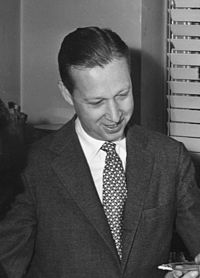
Gilbert Lewis

Gilbert Newton Lewis was born on October 23, 1875 in Weymouth, Massachusetts. His father, Francis Lewis, was a lawyer. When he was nine his parents moved to Lincoln, Nebraska. Lewis had no formal schooling until he was admitted to a preparatory school for the University of Nebraska at the age of 13. He attended the University of Nebraska for two years, then in 1893 he went to Harvard College where he graduated in 1896. After a year of teaching at Philips Academy Andover outside of Boston he returned to Harvard where he earned his MA in 1898 and his PhD in 1899 with a dissertation on electrochemical potentials. He remained at Harvard for on more year as an instructor then went on a traveling fellowship where he visited Wilhelm Ostwald in Leipzig and Walther Nernst in Gottingen. When he returned he spent three more years at Harvard before moving the the Philippines where he was superintendent of weights and measures and chemist at the Bureau of Science.

He returned to the United States in 1905 to a faculty position at the Massachusetts Institute of Technology, where he was appointed assistant professor in 1907, associate professor in 1908, and full professor in 1911. In 1912 he left M.I.T. for the University of California at Berkeley where he was dean of chemistry and a professor of physical chemistry. His time in California was interrupted by First World War when Lewis served as a major in the gas service and chemical warfare service.

His first research interest was thermodynamics. He introduced the idea of activity, or the effective concentration of a chemical species in solution. Lewis is best remembered for his valence theory and the eponymous dot structures. Lewis pictured atoms as cubes with the electrons at the corners. We now know that atoms are spherical and their electrons are spread out in orbitals. Lewis also wrote papers on relativity and defined acids and bases as electron acceptors and electron donators respectively. Lewis was the first to produce deuterium oxide (heavy water) using Ernest Lawrence's cyclotron in 1933.

Honors won by Lewis include election in to the National Academy of Science in 1913. Because of his disagreements with Walther Nernst he was never awarded the Nobel Prize although he was nominated 30 times. He was awarded numerous honorary doctorates and membership in Royal Society, the Chemical Society of London and the Indian, Swedish, and Danish Academies of Science.

On March 23, 1946 Lewis died in a laboratory accident involving hydrogen cyanide which some believed was suicide.


References:

Carey, Charles W.; "Lewis, Gilbert N." in American Scientists; Infobase Publishing; 2006

Hildebrand, Joel H.; "Gilbert Newton Lewis; 1875-1946"; National Academy Press; 1958

Gilbert N. Lewis Wikipedia Entry


Sunday, September 8, 2013

Marthe Vogt

Marthe Louise Vogt was born on September 8, 1903 in Berlin, Germany. Her parents, Cecile and Oskar, Vogt were leading neuroanatomists and an interest in neural research started early with Vogt. She earned a medical doctorate and a PhD in chemistry from the University of Berlin. Vogt worked as an assistant to Otto Trendelenburg at the Berlin University pharmacology department starting in 1930. A year later she was appointed as head of the chemistry department of the Kaiser Wilhelm Institute. In 1933, with the election on Hitler, Vogt decided to emigrate to the United Kingdom. Although she was not Jewish, with the rise of Hitler she felt she must leave Germany. In 1935 she got a Rockefeller Travelling Fellowship at the National Institute for Medical Research in the laboratory of Sir Henry Dale.

While working there she published with Dale and Wilhelm Feldberg a seminal paper in neuroscience describing how acetylcholine serves as neurotransmitter in the voluntary nervous system. Nerve impulses are sent electrically down nerves by changing the permeability of the cell membrane to sodium ions allowing them to rush in. Once the impulse reaches the end it releases acetylcholine into nervous/muscle junction. The actylcholine serves as a chemical messenger quickly diffusing across the interface and causing the muscle to contract. The next year she moved to Girton College, Cambridge, where she remained for four years. When World War II broke out she was scheduled to imprisoned as an enemy national but her colleagues came to her rescue, Dale phoning the Home Office demanding an interview with the Home Secretary. During the war she worked with John Gaddum at the College of the Pharmacological Society in London and in 1948 published another paper with Feldberg demonstrating the presence of acetylcholine using nerves in the brain. Vogt followed Gaddum to the University of Edinburgh, where she was first hired as a lecturer and then as a reader.

In 1952 she was elected to the Royal Society of London, a honor that had only been given to 8 women before her. Vogt's research now centered on amines and their use as a neurotransmitter. Later in her career her work centered on serotonin and its effects in the brain. This research lead to breakthroughs in pharmaceuticals that aids patients with depression.

Honors won by Vogt include a Roylal Medal from the Royal Society in 1981, honorary doctorates from the University of Edinburgh and Cambridge University and honorary membership in the American Academy of Arts and Sciences. She retired due to ill health at the age of 87 and moved to La Jolla, California to live with her sister.

She died on the day after 100th birthday, September 9, 2003.


References:

Anon.; "Marthe Vogt"; The Telegraph; October 3, 2003

Bell, Chris; "Marthe Louise Vogt (1903-2003)"; pA2 Online; Vol.2 Issue 1; retrieved from: pa2online.org

Marthe Vogt Wikipedia Entry

Sunday, September 1, 2013

Karl August Folkers

Karl August Folkers was born in Decatur, Illinois on September 1, 1906. His father August William Folkers was born in Germany and had emigrated to the United States with his parents and married Laura Susan Black in 1904. As Folkers grew up he became interested in chemistry and obtained chemistry sets to experiment with. He attended the local public schools and he attended the University of Illinois at Urbana-Champagne where he earned a BA in chemistry studying under Carl Marvel in 1928. Folkers earned a PhD under Homer Atkins at the University of Wisconsin with a dissertation on using catalysts to reduce esters into alcohols. Folkers did post-doctorate work under Treat Johnson at Yale University studying biochemistry. In 1934 Folkers joined the pharmaceutical company Merck. In 1939 Folkers became the assistant director of research at Merck.

Folkers is best remembered for his determination of the structure of vitamin B-12, which is also called cobalamin. Vitamin B-12 is unique among the water soluble B vitamins in that it contains an atom of cobalt. Vitamin B-12 is used in DNA synthesis and regulation and also fatty acid synthesis. It is synthesized by bacteria and archea and must be ingested by higher organisms. In humans lack of vitamin B-12 causes pernicious anemia where red blood cells do not develop properly and lyse easily. With Fern Rathe and Edward Kaczka, Folkers isolated the antibiotic cathomycin in 1955.

Honors won by Folkers include the Perkin Medal in 1960 and the Priestly Medal in 1985. Folkers was elected to the National Academy of Science in 1948.

Folkers died on December 7, 1997.


References:

Olson, Robert E.; "Karl August Folkers (1906-1997)"; Journal of Nutrition (2001)131:2227-2230

Shive, William; "Karl Augus Folkers September 1, 1906-December 7, 1997"; Biographical Memiors: National Academy Press

Karl August Folkers Wikipedia Entry


Sunday, August 25, 2013

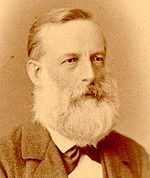
Sir Hans Adolph Krebs

Hans Adolph Krebs was born on August 25, 1900 in Hildesheim, Germany. He was the second child of Georg Krebs, an ear/nose/throat doctor and a biochemist, and his wife Alma. Krebs attended the local grammar school and was briefly conscripted into the German imperial army at the end of World War I. Krebs then studied medicine at the University of Gottingen and the University of Freiburg, and earned his PhD from the University of Hamburg in 1925. He studied chemistry in Berlin for a year and then took a job as an assistant to Otto Warburg at the Kaiser Wilhelm Institute for Biology. He remained there until 1930 when, after briefly doing clinical work in Altona, Germany, he returned to the University of Freiburg, where working with Kurt Henseleit he described the urea cycle, which take place in the mammalian liver. The urea cycle is how mammals remove ammonia (which is toxic in large amounts), from amino acid metabolism, converting it into urea which is excreted by the kidneys.

With the election of Adolph Hitler and the rise of the National Socialist (Nazi) Party in 1933 Krebs was dismissed from his position because of his Jewish heritage. After his dismissal Krebs emigrated to England where he took a position at Cambridge University sponsored by a Rockefeller Foundation Studentship grant. In 1935 he was appointed as a lecturer in pharmacology at Sheffield University and in 1938 he was made lecturer-in-charge of Sheffield University's newly founded department of biochemistry. In 1945 the appointment was raised to a professorship and he took charge of the Medical Research Council's research unit established at the university. In 1954 he was appointed as the Whitley Professor of Biochemistry at Oxford University.

Krebs' major research accomplishment was elucidating the citric acid cycle (also called the Krebs cycle or the tri-carboxcylic acid cycle.)  The citric acid cycle, which takes place in the mitochondrial matrix (inside the mitochondrial inner membrane) in eukaryotes and in the cytosol of  prokaryotes, is a cyclic reaction cycle that produces reduced equivalents that are used to produce cellular energy. It is the final set of reactions of cellular metabolism by which organisms break down carbohydrates producing energy and releasing carbon dioxide (for a video showing the series of reactions by which carbohydrates are broken down, highlighting the citric acid cycle, to make cellular energy see here). For his discovery of the citric acid cycle Krebs shared the 1953 Nobel Prize in physiology and medicine with Fritz Lipmann.

Other honors won by Krebs include a knighthood in 1958 and election as a honorary fellow of Girton College, Cambridge University in 1979.

Krebs died on November 22, 1981.


References:

Stubbs, Marion and Gibbons, Geoff; "Hans Adolph Krebs (1900-1981)...His Life and Times"; IUBMB Life (2000)50:163-166

Hans Krebs Nobel Biography

Hans Adolph Krebs Wikipedia Entry


Sunday, August 18, 2013

Julius Lothar Meyer

Julius Lothar Meyer was born on August 19, 1830 in Varel, which at the time was part of the Dutchy of Oldenburg, and is now part of Germany. He was the fourth of seven children of a physician and his wife. He began his education with the intention of following his father in his career choice and after high school he studied medicine first at Zurich University and then at the University of Wurzburg. He qualified in medicine in 1854. After graduation, interested in physiological chemistry, Meyer worked at the University of Heidelberg, where Robert Bunsen was the chemistry department chair. He earned his Ph.D. from the University of Breslau in 1858, completing a thesis on the action of carbon monoxide on blood. The following year he became a privat-docent in physics and chemistry at Breslau. In 1866 Meyer became professor of chemistry at Karshule Polytechnic and in 1876 he became the first professor of chemistry at the University of Tubingen, where he remained until his death.

Meyer is chiefly remembered for his contributions to the development of the periodic table of elements. In 1864 Meyer published Die Modernen Theorie der Chemie, a chemistry textbook that went through five editions and was translated into English, French, and Russian. Included in the book was a table of 28 elements arranged by increasing atomic mass. Meyer was the first to identify the periodic (repeating) nature of the elements. Periodicity means that chemical elements of different sizes can have similar properties and those properties are repeating in that elements listed on the periodic table in groups (vertical columns) have similar chemical properties. Meyer's publication preceded Dimitri Mendeleev's periodic table (from which the modern periodic table was developed) which was not published until 1869. Like Mendeleev's table Meyer's table has empty spaces for elements that had not been discovered yet.

Meyer is also known for being the first to predict that benzene had a cyclic shape, although he did not predict the alternating single/double bonds found in benzene, that were later described by August Kekule. In 1882, Meyer (with Mendeleev) was awarded the Davy Medal by the Royal Society of London.

Meyer died on April 11, 1895.


References:

The Royal Society of Chemistry: "Julius Lothar Meyer -- The First Identifier of Periodicity?"; retrieved from rsc.org

Daintith, John; "Meyer, Julius Lothar" in the Biographical Encyclopedia of Scientists, Third Edition; CRC Press; 2010

Scerri, Eric; A Tale of Seven Elements; Oxford University Press; 2013

Julius Lothar Meyer Wikipedia Entry


Sunday, August 11, 2013

Cato Maximilian Guldberg

Cato Maximilian Guldberg was born on August 11, 1836 in Christiania (now Oslo) , Norway. He was educated at the University of Christiania. Starting in 1860 he taught mathematics at the Royal Military School. Later he became a professor of applied mathematics at the University of Christiana.

In 1863, working in collaboration with his brother-in-law Peter Waage (with whom he is pictured above, Guldberg is on the left) he formulated the law of mass action. This is a chemical law that says that the rate of any chemical reaction is proportional to the concentration of the reacting chemical(s). So for the chemical reaction A + B -> C, the rate of the reaction will be a constant (k) times the concentrations of A and B, such that rate = k[A][B], where [A] and [B] are the concentrations of A and B. Guldberg and Waage also investigated the effects of temperature on chemical reaction rates. Because Guldberg and Waage published in Norwegian the law of mass action when first published was largely ignored. When it was republished in French it still drew little attention until it was experimentally demonstrated by William Esson and Vernon Harcourt working at Oxford University.

Starting in 1870 Gulberg investigated how a dissolved substance affects the freezing point and vapor pressure of a pure liquid. In 1890 he formulated Guldberg's law which says that the boiling point of a liquid is two thirds the temperature of its critical temperature, the temperature at which a gas cannot be liquefied by increased pressure alone.

Gulberg died on January, 14, 1902 in his native city, which had respelled it's name to Kristiania.


References:

Daintith, John; "Guldberg, Cato Maximilian (1836-1902)" in Biographical Encyclopedia of Scientists, Third Edition; CRC Press; 2010

Tilden, Sir William Augustus; "Cato Maximilian Guldberg" in The Progress of Scientific Chemistry of Our Times; Longmans, Green; 1913

Cato Maximilian Guldberg Wikipedia Entry

Sunday, August 4, 2013

John Wrottesley, Second Baron Wrottesley

John Wrottesley was born on August 5, 1798, near Woverhampton, in central England. Wrottesley was the eldest son of Sir John Wrottesley and his first wife Lady Carolyn Bennet. Wrottesley attended Westminster School from 1810 to 1814. He graduated first class in mathematics from Corpus Christi College, Oxford in 1817. He began building an observatory in Blackheath in 1829 and began making observations in 1831 cataloging the right ascensions of 1318 stars.

Because the celestial sphere of stars are stationary with respect to an orbiting and rotating Earth their position in the sky can be measured using a system of two coordinates, right ascension and declination. Right ascension is measured in hours and minutes and is the equivalent of terrestrial longitude on the celestial sphere. The other coordinate used identify star positions used with right ascension is declination. This is the angle in degrees from the equator of the celestial sphere that a star is. The equator of the celestial sphere is directly above the Earth's equator. For his catalog of stars' right ascensions Wrottesley was awarded a gold medal by the Royal Astronomical Society in 1839.

Wrottesley inherited his father's title as Baron Wrottesley in 1841. With his elevation to Baron he moved his observatory from Blackheath to his new home at Wrottesley Hall. He served as president of the Royal Astronomical Society from 1841 to 1842. He served as president of the Royal Society from 1854 to 1858. A crater on the moon is named after Wrottesley.

Wrotteseley died on October 17, 1867.


References:

Anon.; Obituary; Monthly Notices of the Royal Astronomical Society (1867)28:181-185

Carlyle, Edward Irving; "Wrottesley, John 1798-1867"; in Dictionary of National Biography 1885-1900 Vol. 63. Retrieved from: en.wikisource.com

John Wrottesley, Second Baron Wrottesley Wikipedia Entry